Director-Administrator, ECOCLUB S.A.

Zoos and scientific green/magic imagemaking

Zoos, that historically originate in the private entertainment of rulers and gradually moved on to the 'edutainment' of the general public are now trying to convince us that they are undertaking serious research and conservation work, perhaps as a reaction to increasing environmental and public awareness that the days of all animal abuse and incarceration facilities (including circuses, dolphinaria) are numbered. The green-(magic) imagemaking effort sometimes includes producing articles by prestigious researchers in prestigious journals, such as this onehttp://www.plosone.org/article/info%3Adoi%2F10.1371%2Fjournal.pone.0080311 which claims that up to a quarter of species 'kept' in zoos are officially-considered endangered. (This by itself is one more way in which a designation of a species as endangered may be counter-productive under the currently prevailing socio-economic system (capitalism) as the designation increases its monetary value.). If zoos really wanted to clean up their act, they would gradually transform themselves into research & conservation institutions, abolish public animal enclosures, return...
Continue reading
4883 Hits
0 Comments

Some thoughts on the question of Community Ownership in Tourism.

Determining what an ideal situation or solution (or ultimate goal) could be in every real-world problematic situation is not a utopian exercise but, on the contrary, it is a useful rule of thumb: to evaluate how far we are from achieving the goal, how likely we are to achieve it and if we are currently moving closer or further away. For a meaningful discussion of alternatives, we have to choose a broad political and philosophical framework. On this occasion we will examine the concept of community-owned tourism (COT) and try to tackle four key questions: (a) what constitutes a "local community" (b) according to which criteria an individual can be considered a member of a local community (c) which types of organisation are compatible with 'collective or community ownership' and (d) who should decide and who decides in practice about the previous three clarifications, in each case, or in general. The...

Continue reading
6851 Hits
3 Comments

World Tourism Day, Tourism & Water, All at Sea

The UNWTO this year has picked "Tourism and Water" as the theme of the World Tourism Day. Should they/we be celebrating? While access to clean water and sanitation is not a given for over a billion people in the global south, northern multinationals, use vast amounts of water (private swimming pools, golf courses) often in semi-arid and arid areas, to pamper their affluent guests in luxury resorts / enclaves for the rich that displace vulnerable communities and destroy coastal ecosystems. General annual "parental-advisory" type calls on holiday-makers to voluntarily "minimize" or, worse, "offset" their water use are hypocritical and simply do not work. Can private water offset projects, even technologically-novel ones such as those producing water from air humidity, replace a government's responsibility to provide water and sanitation to all inhabitants in a general, permanent and not sporadic manner (i.e. one village has water due to the benevolence of private benefactors, 10...

Continue reading
5289 Hits
0 Comments

slum tourism vs. solidarity tourism

AlJazeera on June 11 did a special feature on "Slum" Tourism see http://stream.aljazeera.com/story/201306102246-0022819 If such tours are organised by the community itself (or genuine members thereof), following some sort of democratic decision / consensus process, and all proceeds are used to meet the real needs of the community then such tours are acceptable, and will tend to be respectful, meaningful and life-changing for participants. It then becomes a form of solidarity tourism and depending on how it is being promoted (content & channels) it may also attract suitable, politicised tourists not just the curious. "Slum Tourism" is however not a real solution to the problem of Slums, as Slums are the direct and visible products of capitalism, inequality and racism, the causes need treatment, not the symptom. It is of course easy (and safe) for large international media to criticise those small operators who are trying to do the right thing the...

Continue reading
8285 Hits
1 Comment

World Environment Day 2013

On this years World Environment Day it is becoming clearer, through a wide range of developments ranging from the violently suppressed ecological protests in Istanbul, the popular anti-gold / anti-multinational mining campaign in the forest of Skouries, near Halkidiki Greece, the ongoing struggle of indigenous communities against oil giants in the Amazon and against bauxite in India, the growing anti-fracking movement in the United States, widening global awareness about Climate Change and its main causes (Capitalism in all its forms: authoritarian, statist or neoliberal) and a constant flow of tragic sweat-shop deaths that reveal the ugly backstage of consumerism that the Environmental Movement can no longer remain or pretend to be apolitical, and that it must pick sides – either the 99% and the side of progress, of the people, or the 1%, the side of the ecocidal status quo. Or, as Noam Chomsky put it in a recent editorial, “......

Continue reading
7361 Hits
0 Comments

A century of peaceful revolutions from below?

A century of peaceful revolutions from below?

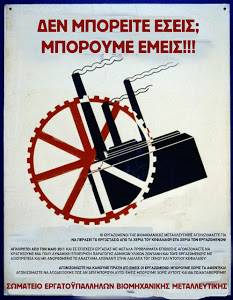
  While (and perhaps because) geopolitics are getting messier each year in the post cold war era, it is the grassroots, empowered and emancipated by information and communications improvements that may take humanity a long way forward during this century. Here are two random, seemingly unrelated, developments, we spotted today:  The reopening as worker-run of an, abandoned by its owners, metal factory, "Viomihaniki Metaleftiki" factory is taking place today 12 February, in Thessaloniki, Greece. In a country where unemployment has already climbed at 30% following the austerity, neoliberal policies imposed by IMF and the EU., such are obvious and necessary solutions.   And the discovery of a simple-to-use method for diagnosing cancer, which costs just 3 cents (and may continue to do so unless/until big pharma get their hands on it), by 15 year Jack Andraka old who following the sudden death of a close family friend decided to search for answers online. As Andraka...

Continue reading
6638 Hits
0 Comments

tourism in the time of apocalypse

  At the end of the month and of the year 2012 we may not see the end of the world, to the disappointment of mayan calenderists, survivalists, and assorted ufologists, yet, the situation is rather apocalyptic. During 2012 the climate crisis brought extreme weather phenomena, while the economic crisis became a permanent fixture in parts of the global north. The global south, with a few exceptions, did not really catch up as it also suffers from the repercussions of the global economic slow-down. Inequality within most countries grew as well. So were tensions, violence, unemployment, bigotry and fascism.. The system’s holy pillars – supposedly too big to fail/fall on our heads, the banks, have been re-erected with public, tax payers money – money now missing from Health and Education – and essentially unreformed, they are back to business as usual. A few dictators were replaced by new ones, while regional...

Continue reading
7350 Hits
0 Comments

The delightful Anafiotika anachronism

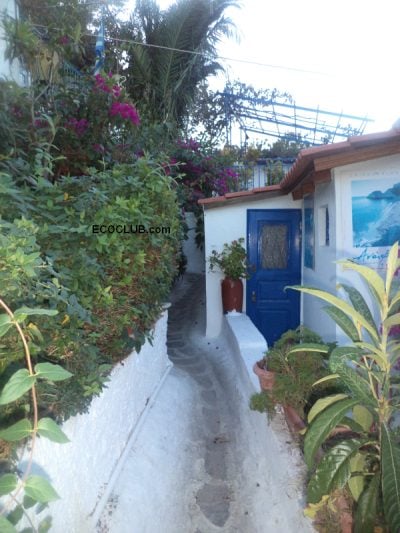
Non-ostentatious, quickly-built and modest enough so as to be missed by the law in the 1840s, today fortuitously missed by many high-season tourists fixating on the Acropolis: the Anafiotika neighbourhood, right below the massive Acropolis rock, on its shady, north-eastern slopes, offers a surreal and serene aegean island experience just 1 km from the political (and occasionally literal) battlegrounds of Syntagma Square; this tiny quarter is not-to-be missed by serious travellers.   Its island architecture is an authentic product of builders from Anafi, an island east of Santorini - one so poor and barren that it was a place of exile during the turbulent 20th century. The first two houses (two rooms really) were, allegedly, built by G. Damigos, a carpenter and M. Sigalas, a stone mason, for their families over a few nights, with the fear of police arriving as this was a no-building area, protected since 1834, due to its...

Continue reading
28898 Hits
0 Comments

an athenian autumn

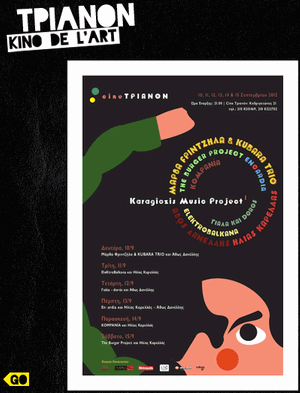
Karagiozis Music Project @ Trianon CinemaWhile international tourist arrivals are falling for a second consecutive year and accommodation rates slashed to bargain levels, the government’s neoliberal agenda includes the long-lease of at least 40 “uninhabited” islands for “tourism development” ignoring the fact that most are considered important bird and marine conservation areas and some are actually located within marine protected areas. In fact some in the government, dreaming of billions of euros in proceeds, would have liked to sell these islands outright. However, for the time being this is not quite legit / allowed by the constitution (money - launderers beware) - although exceptions exist such as a few small private islands (famously Skorpios and Spetsopoula) owned by heirs of shipping magnates, lesser known but richer industrialists and some others incredulously claimed by heirs of traditional goat herdsmen-boatsmen perpetually looking for gullible buyers.

Domestic tourism in particular has taken a big hit, reflected in - among other things - the large losses of ferry operators and the huge number of hotels of all sizes which are for sale and up for grabs by foreign investor funds, offshore schemes and assorted money-launderers.

Other government plans include the abolition of the unemployment benefit paid by the state to hotel workers - the tourism season in most Greek destinations is just 3 months long and hotel employees are usually laid off in October to be rehired the following June - and the selling-off of large state-owned properties for tourism development such as the Afantou estate in Rhodes and the area of the old Athens airport in Elliniko.

28310 Hits
0 Comments

10 dirty airlines, 300 million dirty cars

Ten airlines, two Indian and eight Chinese, accounting for nearly 3% of global airline carbon emissions (which in turn account for around 1.6% of the total global carbon footprint), still refuse to meet a final, June 15 deadline to report their emissions data to the EU. According to an EU Emissions Trading Scheme (ETS) effective from January 1, 2012,  all airlines flying to EU countries are obliged to cover 15% of their emissions by purchasing emission permits.  The extra charge, with carbon offset prices at record lows, expected to be paid by around 4,000 airlines, amounts to just 10 euros (on average) per ticket (close to the current cost of a ton of carbon) and very small to make flying less competitive than eco-friendlier modes of transport such as rail. It is also still unclear in what ways each EU country will use the funds so as to tackle climate change with the...

Continue reading
5756 Hits
0 Comments