|
|
||
|
ISSN 1108-8931 |
INTERNATIONAL ECOTOURISM MONTHLY |
Year 5-Issue 60, May 2004 |
|
|
||
|
Sotiris Kitrilakis
|
||
|
Twenty five years ago I decided to build a summer place in Greece and began looking at various locations in the Ionian Islands. At the time I was living in California. Zakynthos appealed to me over the other Ionian Islands because it had an organic life of its own. It was beautiful and green and the people welcomed me. In the last few years I have been able to make Zakynthos my home year round, taking advantage of the easy communication now available. But Zakynthos has changed drastically over the last ten years. Pockets of intense and uncontrolled tourist development have appeared and this activity is gradually altering the character of the Island. The economy has become dependent on mass tourism and the many hundreds of charter flights arriving each week during the summer months. In the short term, profits from this activity are easier to come by than working the land. Opening a fast food fish & chips 'taverna' or a bar is becoming the dream of the young. These developments have occurred while agriculture has been put on the back burner by the government and industrialized foods are increasingly showing up even up at village supermarkets. The combination of these factors is rapidly eradicating family farming as it was practiced in the past. Knowing that a large segment of the consuming public in the west is searching for flavorful and healthier foods which have been grown on this and other islands, I started Zante Feast in the hope of bringing traditional life on the Island to the attention of these consumers.
The principles of Slow Food, I believe are very sound and
the goals the organization has set can be effective in reversing the damage
done by Fast Food activities. Slow Food is a very loose organization in
which members have a great deal of freedom of action and includes very
diverse individuals. Some groups have been doing good work defending
bio-diversity and traditional agriculture. Others confine their involvement
to enjoying good food. Zante Feast hopes to use Slow Food in our efforts to
preserve artisanal foods. For example, we were able to present real cheeses
from small producers in Greece at Torino (Turin) and Bra during Slow Food
events that attracted thousands of visitors from around the world. As a
result these cheeses are now being exported to Italy as well as the United
States. In my mind, finding customers for traditional producers is a most
import service.
Zante Feast hopes to attract ordinary people with some interest in cooking. We have not designed our holidays for professionals. What is different about this program is that it lets the local proficient but not professional cooks show the visitors how simple good cooking can be. It has been my experience in the United States and United Kingdom that ordinary family cooks can quickly understand and learn about and adapt traditional Greek ingredients and cooking.
Extraordinary things happen when people sit down to a good meal. 'Eating bread and salt' to quote another proverb, can cement relationships. We have found that after the visitors help prepare a flavorful meal, assisting our local cook, a wonderful camaraderie develops when they sit down together to enjoy the fruits of their labors. It's even better when the growers of the vegetables are at the table as well and questions fly back and forth. The visitors most of the time appropriate the new knowledge and are eager to show it off when they return home.
When trade is indeed free, important benefits accrue to trading partners. I agree with you that very often barrier duties have been replaced with other less obvious barriers. Food unfortunately is a sector where protectionism is still very much in evidence. I don't, however believe that naming the origin of foods and insisting on traditional names being reserved for products originating in a region is a bad thing. Feta is a very good example of a name that should be reserved for cheese produced in the traditional way and in locations where the milk has special characteristics. Letting the industrial product of Denmark, the United States or Germany made with hyperfiltration of cow's milk be offered as equivalent to sheep's milk feta from Greece, properly aged, is not only misleading the consumers, but would very quickly put an end to the traditional cheese and put the producers, shepherds and cheese makers out of work. So I am convinced that the only way to preserve real yogurt, cheese, and many other traditional products is to insist that low cost industrially made imitations be named something other than the original. I am also very concerned that the origin of foods can easily be concealed with existing regulations, for example animals imported from Northern Europe into Greece can be labeled as locally grown after the animals have spent sixty days in Greece.
The record of state food regulating agencies when it comes to nutrition and safety, I believe is dismal. For the longest time the official position in Britain was that mad cows did not present a health hazard. In America fish with high mercury content in their flesh grown in fish farms are allowed in commerce and only pregnant women are cautioned to avoid them, not on the label, but through announcements that they may or may not see. The poison chlorpyriphos, used to spray olives in Greece is totally forbidden in America and yet remnants of this insecticide are often found in olives consumed in Greece. There is a long list of harmful substances used in producing foods that periodically have been determined to be hazardous, yet until lengthy trials make it totally obvious that these are harmful, they continue to be used. It took 30 years for the medical establishment in the USA to determine that trans fatty acids in margarine did a lot more harm than natural butterfat. Knowing this I simply don't trust these agencies and their assurances and would rather eat foods that are not exposed to chemicals. Especially since most chemicals used in agriculture rarely turn out to be beneficial, in the long run, in terms of yield. There are many ways that do not involve chemicals to produce organic foods as cheaply as conventional farming. Unfortunately these are not supported by government agencies and the agricultural scientists they employ. Interestingly in California where organic foods have been marketed for sometime, the cost has been coming down as distribution costs are reduced with greater volume. If the elimination of chemicals from the food supply were to become a primary objective, I believe we would see significant cost reductions. Of course we would be saving a lot of medical costs by not having to treat the chronic diseases associated with improper nutrition. In our Zante Feast programs we try to give a glimpse of these issues to our visitors by introducing them to farmers who are practicing sustainable and often organic agriculture.
My opposition to genetically modified foods is not intellectual, but rather very practical. I believe the whole issue is driven by the desire of industrial giants to control the food supply. Reducing the choice of ingredients to a few patented varieties offers a tremendous commercial advantage. Factory farming is secure and there is no going back with GM agricultural products. None of the evidence they have offered supports the reduced cost arguments they advance when the whole picture is taken into account. As far as protecting the environment, this is a ludicrous claim just as their professed concern for feeding the poor is.
Up to the time of the Second World War, Greece was an agricultural country. Food was grown locally with just a few commodities being imported. The economics of agriculture defined the way of life for most Greeks. In this context it is remarkable how conditions remained unchanged for many centuries. The upheaval of the war brought severe disruption to this society and started a chain of events that has greatly transformed Greece over the last 60 years. Devastating wars often have depopulated the countryside in the past in Greece as well as many other parts of the globe. What was different this time however, was the rapid technological change, which made it impossible to return to pre war conditions. Of course the majority of changes improved the quality of life for many Greeks. Improvement however brought with it the challenge of managing change and avoiding the new risks it had created. The dilemmas and opportunities in Greece are very similar to those faced in other developing areas in South America and Eastern Europe. There are no simple answers to these issues. One overriding consideration however is that the way a lot of our food is being produced on industrial farms and in global factories is not sustainable. If we continue in that direction, I believe we will face an unprecedented environmental, social and economical crisis. Before we reach that point, we need to re examine our national and international policies.
In industrialized countries where important choices
affecting the whole world are made, the vast majority of the population
lives in urban centers. They are unfamiliar with the origins of their food
and the people who produce it. It is time for them to become re-acquainted
with the sources of the most important commodity in their lives. Knowing
about food will allow them to make informed and correct decisions regarding
what they eat, how it is produced and where it comes from. This in my mind
is a fundamental goal of both eco and agro tourism.
Zante Feast is a non-profit group dedicated to the preservation of the traditional way of life and family farming and biodiversity on the Island of Zakynthos. Their goal is to introduce visitors from other lands to the Island, the people, the foods and the growers and craftsmen through agro-tourism holidays. Zante-Feast are convinced once their guests have discovered this microcosm, they are likely to become strong supporters of this effort. Visit: www.zante-feast.org Find the complete list of ECOCLUB Interviews here
|
||
|
Home|Ecolodges|News|Shop|Community|Chat|Library|Events|Advertise|Join|Recommend |
||
|
Copyright © 1999-2004 ECOCLUB S.A. All Rights Reserved. |
||

 THE
ECOCLUB INTERVIEW
THE
ECOCLUB INTERVIEW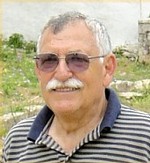 Sotiris
was born in Athens, Greece. At age 14, he was awarded an
exchange student scholarship by the American Field Service and
completed his education in the United States. He received both
Bachelor’s and Master’s degrees in Chemical Engineering from the
Massachusetts Institute of Technology. While at M.I.T. he worked on
the N.A.S.A. Space Program. He was the first employee of Thermo
Electron Corporation, a company founded by his professors to develop
energy conversion systems for space applications. In the early 1960’s
his research group was one of five organizations selected by the
National Heart Institute to develop an artificial heart. For the past twenty years Sotiris has worked at introducing authentic
Greek foods to the American market. He came to the food business from
the world of high technology after developing an appreciation of good
food in the San Francisco East Bay during the 1970’s. He has been a published presenter at the Oxford Symposium on Food and
Cookery, a panelist at the International Olive Oil Council events, a
speaker at American Cheese Society and at I.A.C.P conferences. He has
taught courses at the San Francisco Academy of Arts and Sciences and
the Smithsonian Institution. Throughout the years he continued his
educational mission by teaching numerous cooking classes at cooking
schools throughout the U.S., and has won numerous awards and
recognition as a chef. In 2002, Sotiris created
Sotiris
was born in Athens, Greece. At age 14, he was awarded an
exchange student scholarship by the American Field Service and
completed his education in the United States. He received both
Bachelor’s and Master’s degrees in Chemical Engineering from the
Massachusetts Institute of Technology. While at M.I.T. he worked on
the N.A.S.A. Space Program. He was the first employee of Thermo
Electron Corporation, a company founded by his professors to develop
energy conversion systems for space applications. In the early 1960’s
his research group was one of five organizations selected by the
National Heart Institute to develop an artificial heart. For the past twenty years Sotiris has worked at introducing authentic
Greek foods to the American market. He came to the food business from
the world of high technology after developing an appreciation of good
food in the San Francisco East Bay during the 1970’s. He has been a published presenter at the Oxford Symposium on Food and
Cookery, a panelist at the International Olive Oil Council events, a
speaker at American Cheese Society and at I.A.C.P conferences. He has
taught courses at the San Francisco Academy of Arts and Sciences and
the Smithsonian Institution. Throughout the years he continued his
educational mission by teaching numerous cooking classes at cooking
schools throughout the U.S., and has won numerous awards and
recognition as a chef. In 2002, Sotiris created 
